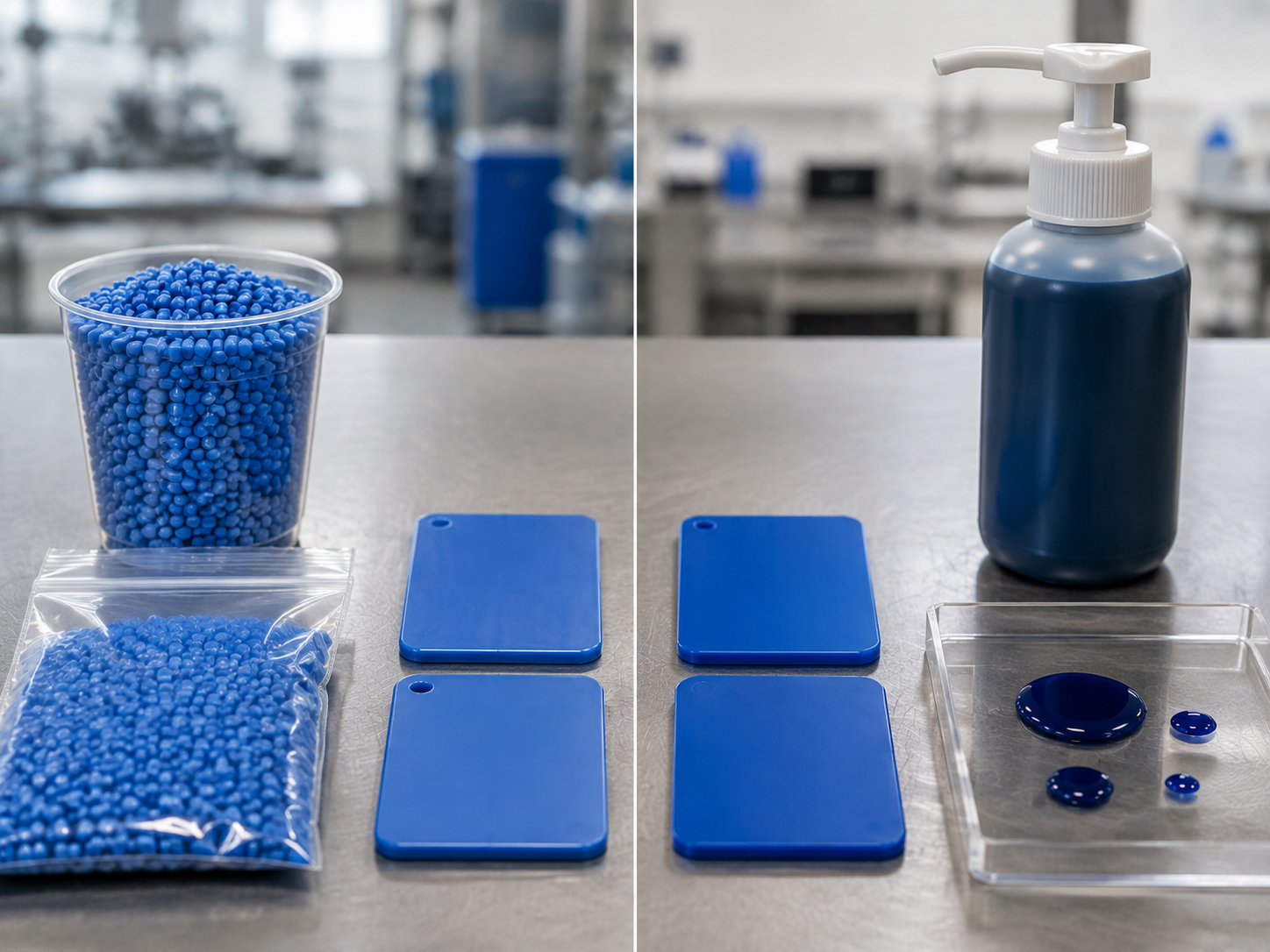
Changing a colorant supplier affects more than purchasing. A plastic colorant supplier review can alter shade, dispersion, cycle stability, scrap, documentation, and the way your US plastics team responds when a problem appears. The right moment to review a supplier is therefore not defined by one late order or one difficult batch, but by a pattern that creates operational risk.
1. Approved color no longer predicts production color
A laboratory plaque is useful only when the supplier also understands the production resin, wall thickness, process, and acceptance method. Repeated corrections after approval are a sign that the technical brief or the formulation process needs attention.
2. Variation is discussed without evidence
A useful supplier conversation identifies the lot, sample, resin, dosage, machine settings, and comparison standard. Vague explanations make it difficult to separate a colorant issue from moisture, contamination, residence time, or a change in the base material.
3. Technical questions travel too slowly
Not every question requires an immediate answer, but ownership should be clear. Your team should know who is reviewing the case, what information is missing, and what the next practical step will be.
4. The recommended product does not fit the process
A pigment, colorant, or masterbatch must be selected for the actual polymer and conversion method. A grade that looks attractive in isolation may migrate, lose strength, create haze, or disperse poorly when used outside its intended scope.
5. Supply conversations ignore total process impact
Unit price matters, but so do dosing, scrap, cleaning, handling, and repeatability. A supplier review should compare the whole production outcome rather than rely on an unsupported savings percentage.
A disciplined way to compare alternatives
Prepare the same brief and the same acceptance criteria for every candidate. Run controlled samples in the production resin, record the settings, retain references, and approve only after the result is repeatable. This creates a fair comparison and gives both teams a useful technical record.