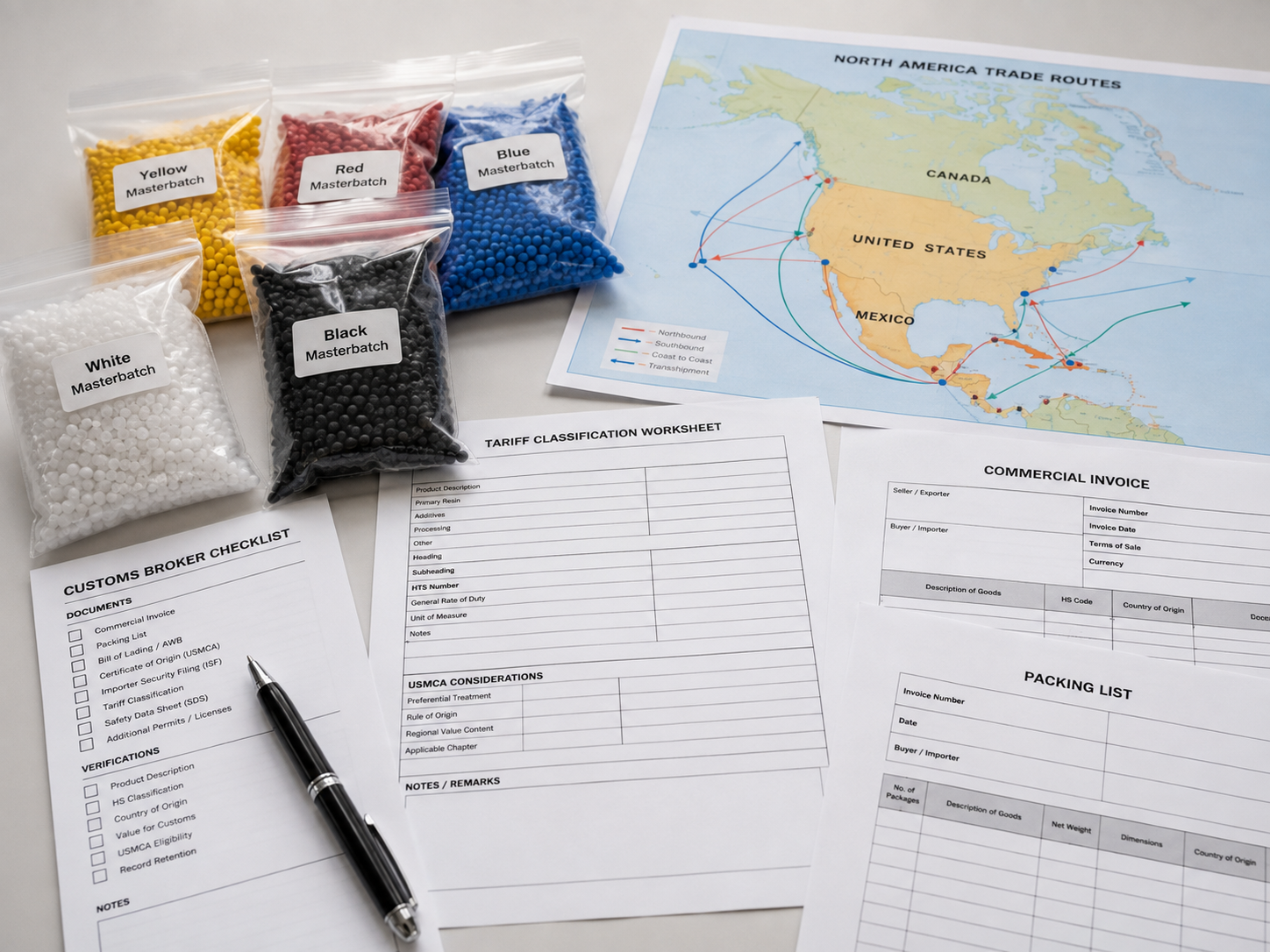
US plastics manufacturers may evaluate Mexican masterbatch suppliers to shorten communication paths, support North American sourcing strategies, reduce sample-loop friction, or create a second qualified source. AGAMA's advantage is not only location: the value is clearer when product selection, technical communication, samples, and logistics are reviewed together.
Closer collaboration can improve the trial loop
Shared time zones and Mexico-to-US transport options can make sample reviews, color approvals, and production conversations easier. The value appears only when both teams use a clear brief, retained standards, and traceable decisions.
A regional source can support resilience
A qualified second source may reduce dependence on one supply route. Qualification should still cover the exact grade, packaging, order process, lead time, and production performance rather than the supplier's location alone.
AGAMA helps structure the technical review
Before quoting, AGAMA can work from resin, process, application, target color, sample, estimated volume, and expected destination. That lets the conversation move toward documented fit instead of a generic catalog match.
Technical fit remains the first gate
Confirm carrier, polymer compatibility, processing temperature, dosage, color standard, and application restrictions. Request only certifications or regulatory statements that are relevant to the finished part and supported for the specific product.
Logistics need transaction-level confirmation
Discuss packaging, incoterms, freight responsibilities, lead-time expectations, and import documentation for the actual order. Do not treat a general delivery estimate as a permanent promise.
Origin claims require their own review
Mexican manufacture or shipment does not automatically establish USMCA eligibility. Classification and origin must be reviewed for each product and transaction by the parties responsible for the claim.
A useful first conversation
Bring the resin, process, application, color reference, expected volume, destination, and acceptance criteria. That information allows a supplier to say what is documented, what must be tested, and what remains outside the product's scope.